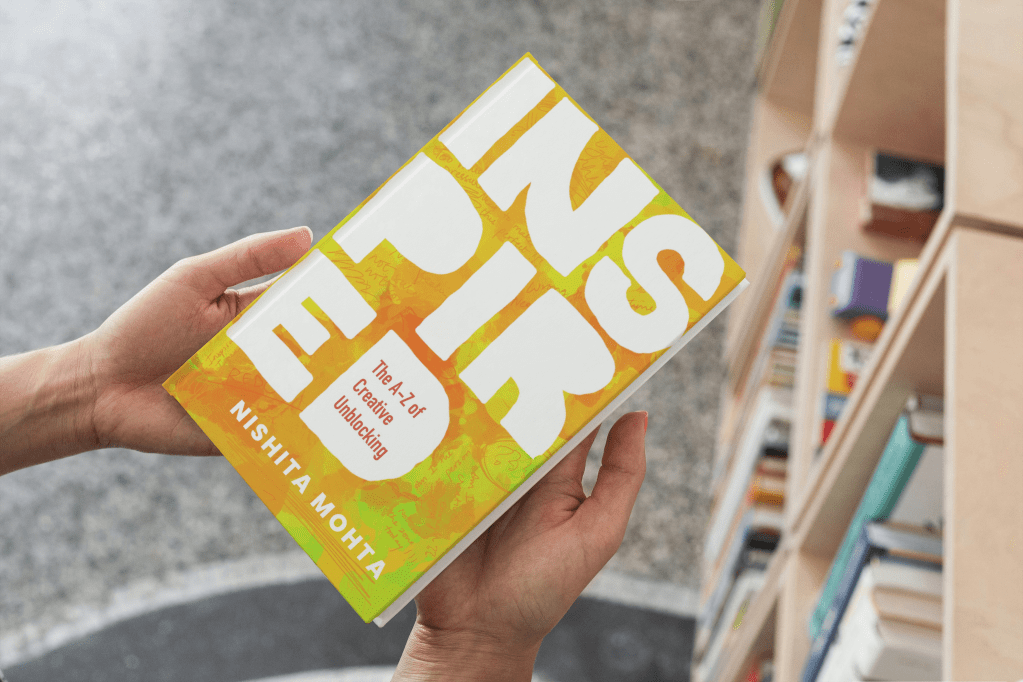
From the introduction to ‘Inspired: The A-Z of Creative Unblocking’

Creative mindblocks are funny things, aren’t they? Those tangled thoughts that hold us back feel deeply personal, a battle fought silently within our minds and felt deep in our guts. But in reality, they’re quite universal.
Sure, the shiny highlights on social media will make us feel otherwise. But when we sit down for a heart-to-heart with another creative, in that privacy of conversation, we’re more than relieved to share our own experiences with self-doubt.
The voice of our Inner Critic can be deafening in our own minds, but it pales in comparison to the resounding confirmation of “I feel the same way” from a fellow creative. These judgement-free conversations are like flashlights that help us resume walking when our mindblocks feel like a dark winding tunnel with no way out. They remind us that we’re not alone.
And hey, we all need that reminder when faced with feelings of not being qualified enough, disciplined enough, good enough…just not enough.
So why don’t we have these almost-medicinal conversations more often?
I’ve located two reasons so far.
First, vulnerability is scary. When I began sharing my art and writing about my mindblocks four years ago, I worried about negative judgement – about being seen as weak or even unprofessional. But to my surprise, these personal experiences resonated with other creatives in a way that peeled back the “all-sorted” facade we all wear in public. The most recurring comment I received was, “I needed to hear this today.” The more people I connected with, the clearer it became: the creative process is personal, yet our mindblocks are often eerily similar.
The second reason became evident to me much later, when I took my perspective of creative mindblocks to live audiences. I’d discuss the Inner Critic and mindblocks in design conferences and academic webinars, using research findings and anecdotes to explain how to tackle them. But inevitably, a more fundamental question would feature in the Q&A later: “How can I even tell if it’s a mind block to begin with?”
That’s the one question I just couldn’t answer in any 10- or 30-minute speaking slot.
So, I hope to answer it through this book ‘INSPIRED‘.
Think about physical pain, for a minute.
How do we know it’s probably a fever if our forehead is burning up? How do we learn to wash and put a bandaid on a small cut? How do we begin to link our neck pain with our shrimp-like posture at the work desk?
My best guess is this: it’s because we have the vocabulary for it, and vocabulary allows for both reflection and conversation.
This vocabulary lets us observe our experiences (“Oh, this thing called my lower back is experiencing something I can describe as dull and constant pain”), share it with others, and discover possible solutions. We learn the basics throughout childhood, and then some more, depending on where life takes us. For example, runners end up learning a lot about knee pains, and anyone who visits construction sites regularly learns about the potential hazards there.
For creatives, physical pain isn’t the most common roadblock. Our challenges are often intellectual. And I have to accept: early in my career, I’d felt extremely unprepared to tackle them. Sure, I’d picked up a ton of skills during my creative education and continued my learning journey. But my knowledge was pretty limited when it came to the most important tool of the trade: my mind!
I had no label to describe what it meant to “feel stuck” or “not inspired”. I wasn’t sure of what follow-up questions to ask myself when in a rut. I definitely found it difficult to be self-compassionate (or even just accepting) in the face of a mindblock.
And I know I’m not the only one. These are challenges that almost all creatives face.
This book is my attempt to change that.
This book is a collection of honest and (mostly) compassionate conversations about our creative roadblocks – conversations I wish would become more common. It may not be the first on this topic, and I sure hope it won’t be the last. It’s an amplifier for a conversation that’s been simmering for too long. What started as a 30-day project on social media four years back has now grown into this book, through years of sharing, listening, and learning.
Each chapter is a conversation that tackles a common mindblock, and you might find yourself resonating with different conversations at different points in your journey. Lessons from psychology are woven together with the wisdom gleaned from fellow creatives I admire. Ultimately, the chapters are intended to be useful tools that can help us build our “mindblock vocabulary” and talk about them with more ease. You’ll find plenty of my own stories sprinkled in, including that of the creative journey behind this very book.
For me, it’s surreal to see this online project become a book; it feels like a giant leap! Yet, looking back month by month, it’s actually been a marathon. A humbling-yet-encouraging reminder that we can achieve big things – slowly, but surely.
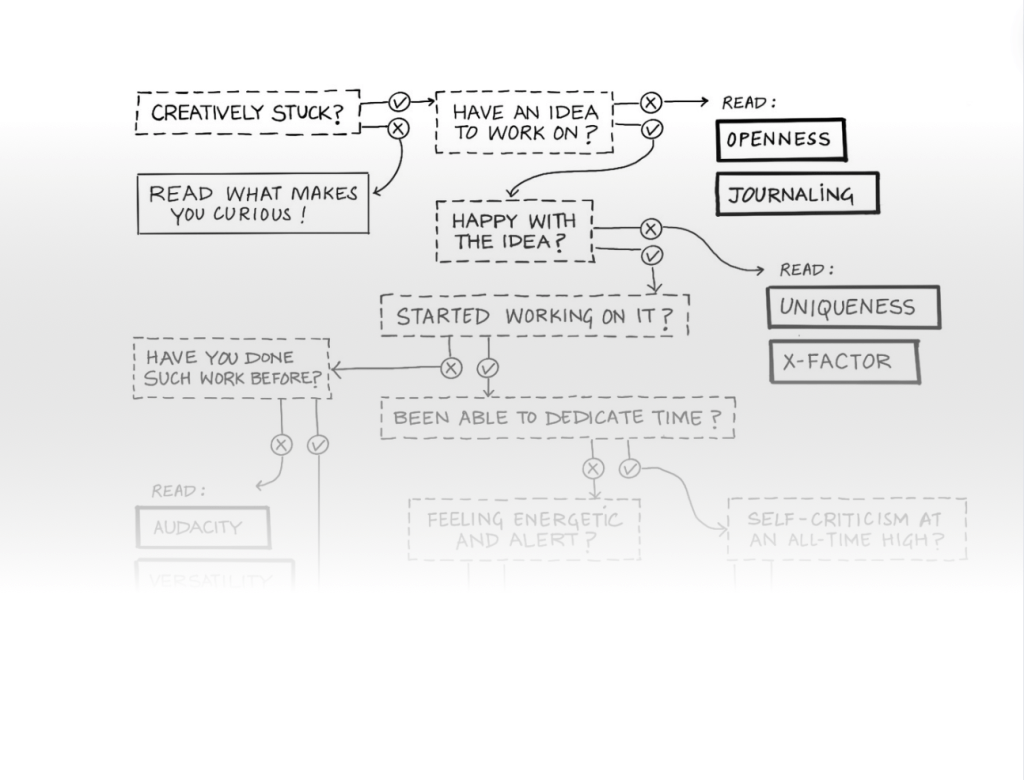
So, welcome to the book! You choose your path. I highly recommend reading it straight through – from the first chapter till the final one. But you also have the option of following the chapter map on the next page for a more adventurous journey. This map can be your ally when you’re stuck and don’t want to (nor should you have to!) reread the entire book. It can guide you to the most helpful chapters based on your current creative hurdle. It’s not an exhaustive, all-encompassing map, but it’ll get you started. And over time, on this creative adventure, you’ll hopefully discover your own unique trails and connections.
or get the Kindle version on Amazon
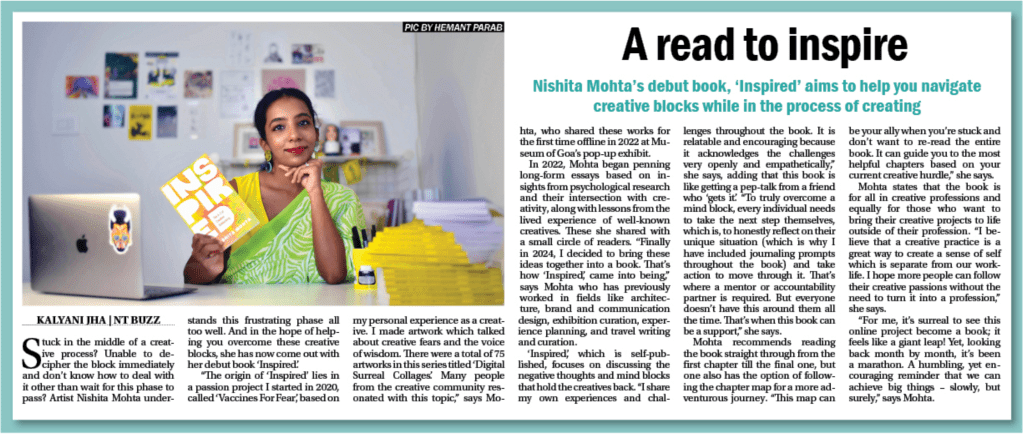
‘Inspired’ in the news:
 nishita mohta