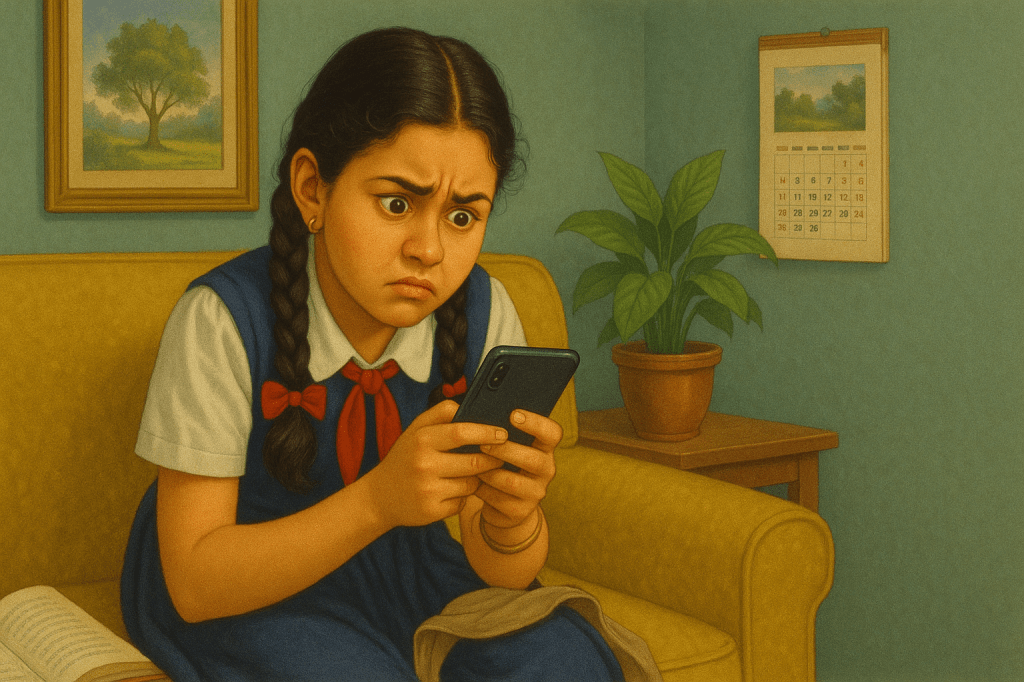
Staying healthy (in the physical world)
We all know what personal hygiene means in the physical world. We wash our hands, we avoid eating food that’s been on the floor, we keep our distance when we have a cold, and so on… We’re taught these basic practices as kids, and they keep coming up in public messages throughout our lives. These become small, everyday acts of protection to ward of common diseases caused by unhygienic conditions.
Sometimes, though, we encounter unexpected allergies and it can be really upsetting when a favourite snack or beloved pet starts triggering a violet immune reaction. And so, even if it feels unfair because it’s some thing so harmless for others and even delightful, we learn to avoid these triggers.
Many of us go a step further: we choose to proactively add practices like eating consciously, exercising regularly and getting enough sleep. We do these to maintain a better quality of life and to feel more energetic and strong.
But all the health & hygiene practices I mentioned so far are for the physical world. What about the world where we now spend so much of our time: the virtual world?
Teleporting between the physical & virtual
We have our physical homes, where we curl up on the couch with a book and have people over for dinner. And then we have our texts and video calls with friends living oceans away. We have offices, with desks and coffee machines and small talk, but we also have Slack, Zoom, and email. We have our streets and parks and cafés, and then we have… social media. I think of social media as a giant virtual street: a blend of market stalls, libraries, galleries, lecture halls, small cozy cafes, and big loud festivals. These are all virtual extensions that are useful additions to our lives, and sometimes replacements that take over completely.
In the case of social media… Inside a single app lives a whole parallel universe. If I need a change of scene, my body no longer has to make the effort of getting up, putting on shoes, stepping outside, or even just walking till the window to look out. Human behaviour is optimised to seek the lowest-effort solution by default and so, at the click of a button, my mind can move at lightning speed and enter the virtual world where none of my current problems exist. One moment, I might be feeling creatively stuck while writing at my desk, and in the next second, I can escape – teleporting my mind into a place where I don’t have to even think, let alone try to solve, the challenge at hand.
We teleport our attention from one emotional, intellectual or social landscape to another, and we do this teleportation dozens, maybe even hundreds, of times a day. Social media is a fascinating place to connect, learn, share, and be entertained. There’s so much value in being there, and so many ways to interact, just as we would in physical public spaces. But as we all know, that landscape isn’t pristine either. Just like real streets, the virtual streets are full of good, bad, and everything in between. It can get chaotic, exhausting and “unhygienic.”
Every time I open that small bright window into my feed, it feels like I’ve stepped into a street where everyone is talking over each other. Bright flashing lights everywhere, window displays tempting me with things I don’t need, street vendors calling me to taste yummy treats. I may be enthralled temporarily, but I also overwhelmed eventually, for sure. And then, apart from this general noise pollution, there are the “allergic triggers”: bits of information that might be harmless (even fun) for others, but that cause a strong negative reaction in me which lingers on and worsens with time. And there’s no quick mental epipen to calm this allergy it’s been triggered.
Is it a surprise that when exposed to everything all at once, and in an uncontrolled manner, our minds fall sick?
I don’t need to pull up stats or graphs to show the decline in our collective mental health alongside the rise of social media. We all intuitively feel this, right? With advances in medicine, diseases of the body are becoming more controllable and treatable. But diseases of the mind, the part of us which roams the streets of social media, are undeniably on the rise and poor mental health has become almost an expected part of modern life. So my question is: if we’re spending so much time in these virtual public spaces, shouldn’t we have some rules for hygiene here too? Just so that we can continue enjoying the virtual space, but with less side-effects.
Some of you may choose to completely avoid that world altogether, and that’s fine because each of us has a different lifestyle anyway – online & offline. For me, a complete disconnect isn’t the solution and that’s something I realised during my six-month break from social media. There were so many things I enjoyed about it and I’ve written more about that in a different piece. But I also started seeing absolute withdrawal out of fear as a form of virtual agoraphobia, which is an extreme fear of public spaces. I do need to engage with the world, both physically and virtually, because the virtual world has become an undeniable extension of real life. But there must be a healthier way to do it.
Lessons from my social media sabbatical
During those six months away from social media, I took time to reflect often and the difference in my behaviour and as well perspective was profound — I felt more present, more creative, more connected to my offline life. At the same time, I was always aware of how easy it would be to slip back into old habits once I return. It reminded me of my experience with Vipassana in 2023, which was a 10-day silent meditation retreat. The time there was powerful and gave me a small but precious shift in my inner world. But when I came back to everyday life, it was incredibly challenging to carry that essence forward.
I realized that these retreats, whether from the physical or the virtual world, are extremely important. They allow us to experiment with another way of being, in a short time frame and controlled manner. These experiences have helped me overcome some of my anxieties about how I show up in the physical & virtual world, and they have helped me get more clarity on which version of myself I enjoy being when I’m on my own. But sudden, extreme shifts aren’t sustainable. Real, lasting change requires gentle, continuous steps… the kind that can actually become part of our daily rhythm.
To mindfully take the benefits of my own social media sabbatical forward, I’ve made some changes to how I personally use the apps – both for consuming and creating content, and this shift from Instagram-only, to more long-form content through blogs & YouTube videos is part of that shift which you’re witnessing right now.
Along with that, as a fun project, I decided to start writing a “Health & Hygiene Manual” inspired by vintage guides on staying healthy like this one from 1919 created by the American Social Hygiene Association. I want to include in it all the small actions, rooted in big lessons, that I want to remember and live by. These are lessons no one really teaches us yet, but that could benefit all of us.
Our understanding of the mind and mental health is still young compared to our knowledge of physical health and nutrition. But we’re learning. And I hope this is my small way of helping move that conversation forward.
A quick reminder: If you feel like it, go ahead and customise them for yourself — or toss them out altogether. This isn’t a “complete guide to everything.” It’s just a starting point, an invitation to think more intentionally about how we move through the virtual streets.
So… let’s begin.
Lesson #1: Double-check your guest list
I see my private Instagram account as an extension of my living room. It’s where I invite people I would genuinely want to sit with, maybe over tea and snacks, sharing stories and small moments of life. No brands, no influencers pushing skincare routines or morning rituals I don’t care about — just a small circle of people who bring warmth, curiosity, and comfort.
Take a moment to think: who are the people on your guest list? Who all follow you, and who do you follow in return?
If you were hosting a big milestone party, would this person make the guest list? Perhaps five years ago, your old colleague might have been there. But now that you’ve moved cities, changed jobs, and haven’t spoken in years, would you still want them to drop by your living room and see every intimate update? If yes — that’s beautiful. Relationships don’t always require constant maintenance; sometimes there’s a deep warmth that survives time. But if the answer is no, that’s okay too. There’s no need to feel guilty for quietly updating that list.
Similarly, it’s okay to unfollow people you’re no longer joyfully curious about. Ask yourself: would I want to visit their home and hear about their life? If not, there’s no need to keep peeking into their virtual windows either.
This guest list looks way different for my public account: I would treat that as more of an event – perhaps like a creative conference – that I’m hosting. The audience there would be much larger, but disruptive behaviour would still not be tolerated. And of course, your metaphor might be even more different and your personal rules will evolve accordingly.
Lesson #2: Slow down the scroll
The title sounds simple enough, right? But let’s unpack why it’s so important.
Have you heard about the concept of narrative transportation? It’s when we become so immersed in a story that our mind temporarily feels like it’s living inside it. It’s why we cry during movies or feel inspired after reading a great novel. With long form content, we get to spend time with every story for enough time to really feel it, process it and allow it to become a part of us in a tiny way.
With short form content on social media however, we’re transported between countless micro-stories, each only a few seconds long. One moment you’re on a serene mountain retreat, then at a political protest, then cooing over a purring kitten, then inside someone’s colourful home office, then watching a recipe being whipped up in real time. Imagine actually teleporting between these scenes every three seconds in real life. We’d feel disoriented, maybe even nauseous. But online, we’ve come to see this as normal.
A basic hygiene practice is to slow it all down. Consider strolling through a city street market full of diverse activity, pausing to admire a piece of handmade art or think critically about an important message — instead of sprinting through in a blur. Online, this could look like: really taking time to read captions fully, watching stories with intention rather than skipping mindlessly, and reflecting on what you just saw before moving to the next thing. It might mean watching more short-form content from the *same* creator, so at least the narrative remains somewhat coherent.
Sometimes stepping away from short-form content altogether. I’ve started gravitating toward longer podcasts, video essays or newsletters. Even some TV series. Entertainment is a beautiful part of life, but there’s a big difference between feeling entertained and numbly scrolling just to kill time. When I scroll out of boredom, 20 minutes vanish in a blink, leaving me feeling oddly emptier. But if I spend that same 20 minutes with a single video or book, I feel enriched, entertained, and more grounded.
To take it a step further, try articulating your own opinions in response, so that you’re really thinking and having a conversation. For example, after reading this, you could ask yourself: “Hmm, what’s my take on this? Do I agree? What might I add?” That’s when these platforms truly become social: two-way streets rather than one-way firehoses of information. Over time, you might just realise that you simply don’t want to consume information from certain brands or people at all. In that case, feel free to unfollow or mute them, and that automatically starts leading to the kind of curation of our content which I was talking about in the first hygiene tip anyway.
Lesson #3: Keep tabs on your social & mental battery
In the physical world, some of us love large gatherings and can dance until 3 a.m., while others need a quiet corner after just an hour. I know I tend towards the latter, and you’ll see my preference show up in how I write. You might be very different and your approach to interactions would be unique to you. At the end of the day, we all have different capacities for social interaction. And the same is true in the virtual world. Even though we might be lying in bed, phone in hand, we’re still interacting socially – reading updates, reacting to stories, and engaging in para-social relationships (those one-sided bonds we form with people who don’t actually know us, like favourite creators or public figures, but we feel emotionally invested in). All these interactions (both explicit and implicit) drain our social and mental batteries.
What’s tricky is that the fatigue isn’t always obvious. Your body might feel fine, but your mind is quietly screaming for rest. And our instinct? To keep consuming more content, as if it will magically recharge us. But a tired mind cannot be rejuvenated by more input. It needs stillness, silence, maybe even a nap.
Our mental battery is finite. We can only deeply care about so many things at once. We need to honor that limit — online just as we do offline. Jia Tolentino put it beautifully in the book Trick Mirror:
“The internet has become the central organ of contemporary life. It has rewired our brains, returning us to a state of primitive hyper-awareness and distraction, while overloading us with much more sensory input than was ever possible in primitive times.”
In a nutshell, the internet tricks us into feeling like we can, in fact we should, interact with everything and everyone. But really, there are only so many f*$ks we can give without our brain completely collapsing, and we have to reserve them for what really matters to our unique lives & worldview.
Lesson #4: Wash up before bed
Just like it’s advisable to brush our teeth and wash our faces before we sleep, we need a digital wind-down ritual for our minds too. For me, this looks like: keeping my phone, with its Internet off, in a different room after 9 p.m., so my brain can sink into quiet.
But it’s not always as easy as that. Many a times, specially when my brain has been working at manic speed in the evenings, I need to do a cool-down stretch, exactly how I’d cool down after an intense run or workout. My “night time ritual” to help my mind calm down includes a calming audios on Spotify, slow-living content creators and a night light in my room which looks like there’s ripples of water on my ceiling. On difficult days, these act like gentle balms, helping me slow down before fulling switching off.
Lesson #5: Speak softly, with intent
Years ago, I heard someone say, *“If it’s not on the ‘gram, did it even happen?”* At the time, it felt lighthearted and fun. In the 2010’s, we loved showing off our highlights and sharing al the fun & proud moments. But over time, that phrase began to feel heavy. Instead of capturing joy, it started to feel like a mandatory performance… a documentation ritual that defined the value of an experience.
For example: At the end of many enriching, real-world social experiences such as design conferences, I felt that the experience wasn’t fully “complete” until I had posted about it on Instagram and LinkedIn. When the response was tepid, I’d feel a small sting, as though my real-life experience had been invalidated somehow.
In 2024, while self-publishing my first book ‘Inspired: The A–Z of Creative Unblocking’, I found myself slipping even deeper into performing for the algorithm. I tried posting regularly, hoped every post would resonate, experimented with content calendars. I’d get excited brainstorming topics but then freeze when it came time to record or write. It felt like talking to a room full of imaginary friends, trying to say just the right thing to inspire them. It became exhausting.
Of course, there were potential professional benefits: visibility, marketing, community engagement. And that’s why I kept doing it. There’s another quote from Jia Tolentino that resonates with me deeply:
“In real life, you can walk around living life and be visible to other people. But on the internet — for anyone to see you, you have to ‘act’. You have to communicate in order to maintain an internet presence.”
But there was also a cost — the emotional labor of creating the perfect visuals or videos, crafting captions that struck the right tone, posting at the optimal time, and then anxiously watching for likes and comments. Creating social media content in this manner is THE MOST energy-consuming thing I do as a human, and the absence of it during my sabbatical felt like a huge relief. I realised how deeply influenced I was by how other creators were supposedly acing it. And I forgot to even ask myself, what would my approach be for doing this? In order to even start my break from social media, I had to give myself permission to stop working hard at “being seen.” To not force myself to perform or promote myself every single day. I also had to tell myself: You don’t need to put your whole self out there, constantly performing, just to stay “visible.”
6-7 months later, I now have a bit more clarity on who I am & how much of me I want to share publicly.
I want to now show up only when I have something genuinely valuable to share with my community, and not keep churning out post after post just for the sake of consistent posting. I don’t want to get into any forms of virtue signalling, and I don’t want to fill up my grid with unrelated personal photos to “build personal relatability with my audience”. I want to be clear with myself: I am not a lifestyle influencer, I am not a food blogger, I am not an expert stylist and I am not a fitness trainer. So my lifestyle, my meals, my daily outfits and my exercise routine are really of no value to anyone.
What is of value, is my knowledge of the creative process & the mind. My ability to help other creatives unlock more calm & confidence for themselves. And that’s what I want to focus my limited energy on.
On the idea of “slow creation”
I want to keep writing to remember. To remind my future self. And that’s why I’m writing this – not just to create more “content,” but to deeply understand my own experience and invite you into the conversation. But it’s a slow process. This piece took me a whole month to write this all down, not because I type slow but because I kept asking myself: “What else am I missing?”
Sometime over this last week, I had to simply accept and remind myself that comprehension doesn’t happen all at once. It happens in layers, over time. We need to keep reflecting, articulating, and even sharing before we’re 100% “done.” We don’t need to wait until every possible insight is polished and complete.
There are more hygiene practices still forming in my head… they’re slow-cooking, and I’ll write about them when they’re ready. In the meantime, I’d love to compare notes with you, dear reader. What if we become like gym buddies, but for our minds? Tell me:
- What has your relationship with social media felt like?
- What have you learned (or unlearned) about your own mental health there?
- What are your best “hygiene” practices for the virtual world?
I’d love to hear from you.
☀️
Before I go, a reminder that if you’d like to explore more about the mind, creativity, and gentle ways to unblock yourself, I invite you to read my book Inspired: The A–Z of Creative Unblocking. It’s a compassionate guide, full of small nudges to help you reconnect with your creative self.
Anyway, thank you for hanging out with me here. If this resonated, feel free to tap like — and then maybe go outside for a minute. Stretch your legs. Take a few deep breaths.
See you next time. 🙂
 nishita mohta
One response to “Keeping Fit in the Virtual World: learnings & unlearnings from my 6-month social media sabbatical”
This piece is so timely! I’ve been trying to make space in my physical and virtual world for things I want to/like doing too. I’ve tried to reduce screen time by installing Instagram once everyday and deleting the app after checking it as it was taking up my maximum screen time. I’m also tracking my screen time weekly in my journal. I do struggle with multiple downloads in a day when I’m not focused, but starting somewhere is good at the moment. I’ve started reading more long form content, especially on Substack as they give more insight into the content than just photos with captions. Also I’ve realised that writing helps so much with thinking and remembering (I read somewhere- we write to taste life twice, in the moment and in retrospect) and I’m trying to get into the habit of it. I’m writing a reflective piece on my work sabbatical – reading that comprehensions happen in layers and over time is encouraging as a week into writing it I started feeling if I’ll be able to capture everything all at once. Reading this, I’ve realised that it can take as long as it needs to! Keep writing 🙂
LikeLike